
Log cabin buildings usually come with many advantages, including higher quality indoor air that their natural construction material provides. This is known to help with both physical and mental health, e.g. boost your productivity, help you truly relax and maintain your well-being, and so on. When it comes to making sure the air quality is good and the rooms in the log cabin do not get stuffy, there is some upkeep. A few tips would be to treat the wood every year (this is part of the warranty conditions too), not to put plants next to the walls of the log cabin, and make sure you have a good source of heating. However, this is just the start – and it isn’t enough. So, let’s get into it by looking at what problems may arise from poor log cabin ventilation and how they can disrupt your everyday life.
.jpg)
How do log cabin ventilation issues happen?
The truth is, the better insulated the log cabin, the higher the chance that problems concerning proper ventilation might arise. If the construction is airtight and there are no gaps for air to enter and leave the log cabin, it becomes stale and polluted. The heat and moisture also build up over time. If the log cabin is built in a location that endures a lot of rain, the moisture can also condensate inside the log cabin, causing dew on the walls, which can lead to mould and other issues that we will touch upon below.
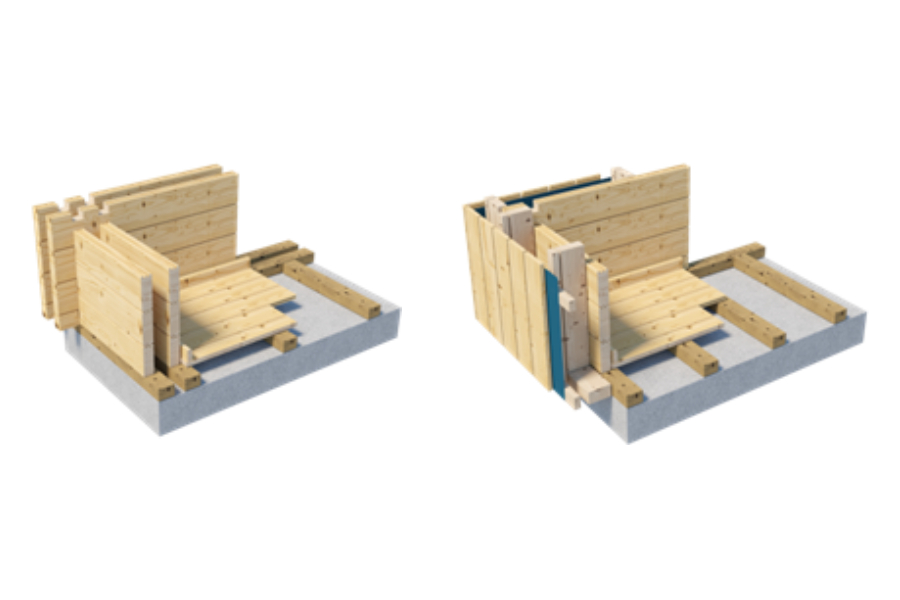
Twin skin wall (44 + 44 mm) on the left versus a wall with cladding (44 mm + C) on the right
To get into more detail about the construction of an insulated log cabin, it’s important to know that it either consists of a double wall (called twin skin) with insulation in between or a single wall and cladding with insulation in between. These thick layers mean that the construction has less breathability and is more securely sealed up than in the uninsulated models. Of course, insulation is crucial for prefabricated log cabins to be usable all year long and enjoyed in comfort, but it also makes proper ventilation harder to accomplish.
This process of condensation is only natural in unventilated rooms, as is the fact that opening a window is just not enough to solve it. Firstly, if a window is opened, the effect will not last long after it is closed, so it should be kept open at all times of the day. However, that is not efficient in terms of heating costs or ventilation itself. Constant ventilation via an opened window or door means that the room will get hot quickly during the summer and cold during the winter. Thus, it’s no wonder that proper ventilation is a common concern for many, proven by a number of people Googling “how to ventilate a log cabin”!
The dire consequences of substandard log cabin ventilation
The effects of poor ventilation or insufficient passive ventilation (opening windows) can be really harmful for both the people living inside the log cabin and for the structure itself. Besides such simple annoyances like the accumulation of cooking odours, the allergen polluted air can cause serious respiratory issues that can lead to chronic conditions over time. Air pollution in the cities is already in dire straits, but the air quality at home can be controlled so as to give the body a break from bacteria, dust, allergens, smoke, and other harmful particles.
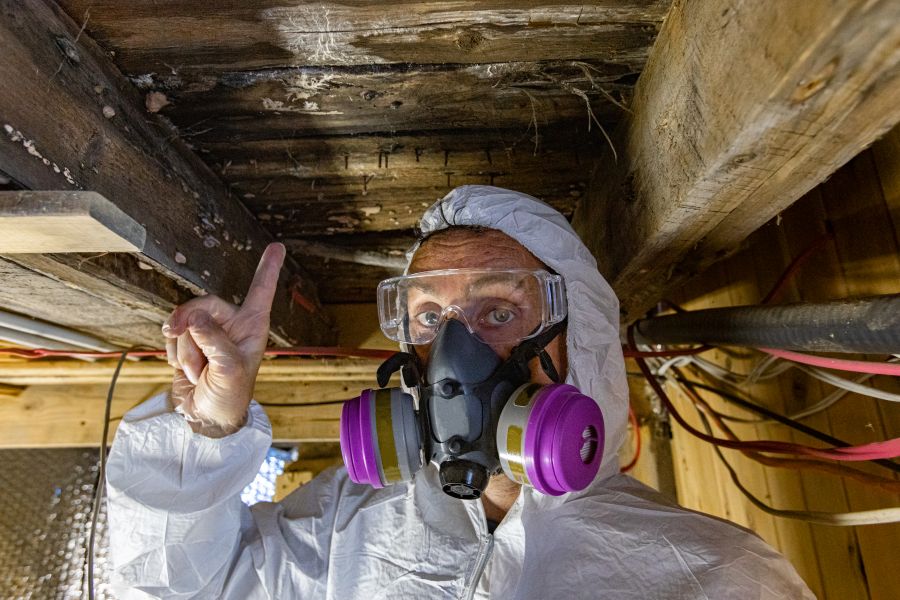
As for the log cabin itself, the dampness inside can compromise the structural integrity of the building, which means that the longevity of it can be cut short. How does this happen? The moisture condensates and forms as drops on the walls, which is ideal for mould to form and take over more and more space. This could lead to needing renovation or the log cabin becoming unusable at all. Since the logs are a natural building block, it means that they are prone to deformations over time, however, these can be minimal, whereas the damage caused by poor ventilation is irreversible.
How to ventilate a log cabin properly so that it serves you for years
There are a few popular ways of ventilation, including:
• Natural ventilation
• Vents
• Recuperation systems
Let’s look at these one by one.
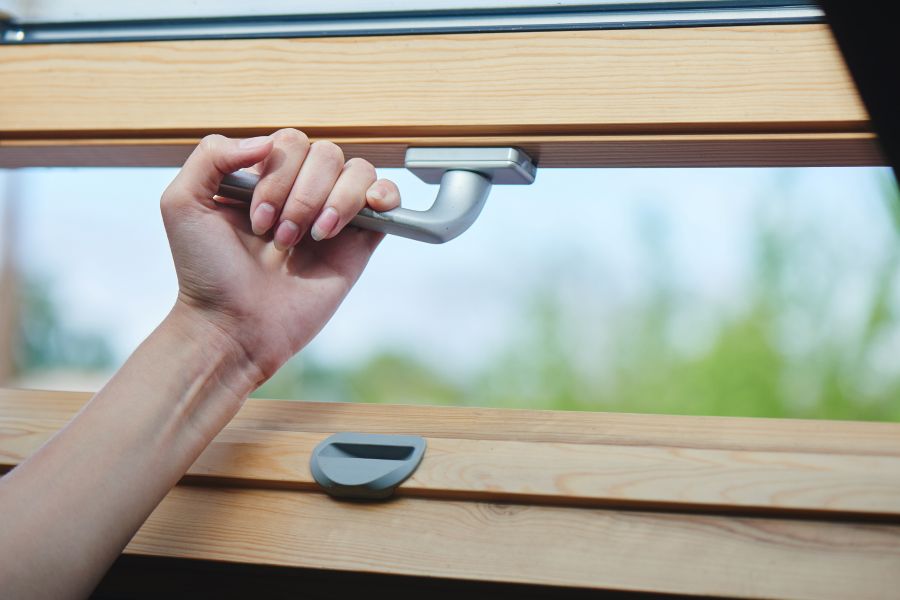
Natural ventilation may be the first method that comes to mind, but relying on it would be insufficient and ineffective, as discussed previously.
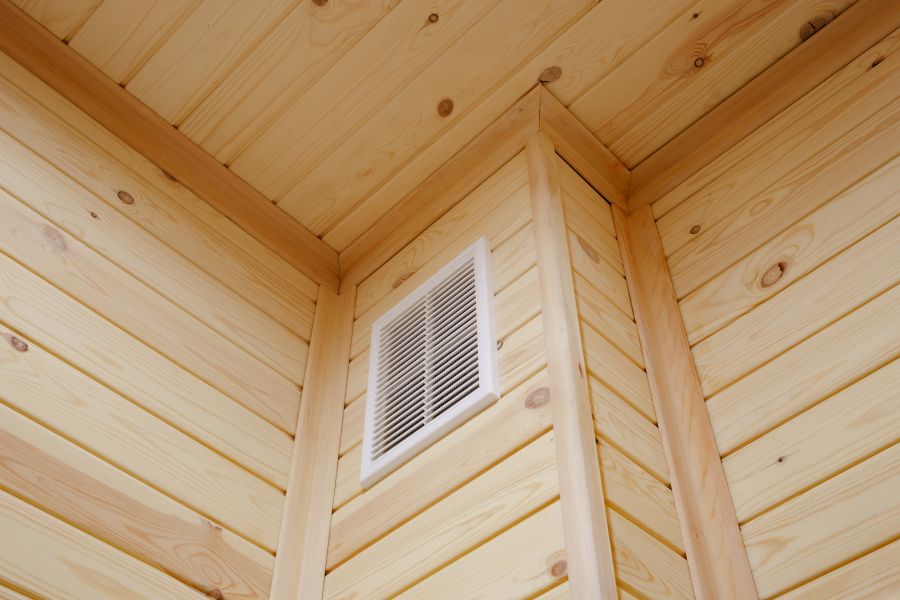
Another way of ventilation that is also insufficient is installing vents. Unfortunately, vents are small, so the air circulation would only be minimal and wouldn’t prevent or solve any of the issues that can occur without proper ventilation. This method is also costly, since the air from outside would also make the rooms colder, so more heating would need to be used. Please note that vents need to be coated, and they can also get clogged, in which case they should be cleared as soon as possible. If the vent or its screen gets damaged, it must also be replaced.
Recuperation systems are both cost-effective and very efficient. A recuperator works by exchanging the inside air with the outside one. The air from the rooms warms up the air from outside due to the design of the airflows. The process keeps the log cabin warm, which cuts heating costs. The circulation is enough to maintain superb log cabin ventilation and make sure that no moisture can build up and threaten the building’s integrity.
An effective solution for log cabin ventilation by Quick-garden.co.uk
Next to each of our insulated buildings you will find the wall-mounted heat recovery ventilation system Mitsubishi Electric VL-100U5-E. It’s a mini recuperator, which we consider to be the perfect solution for log cabin ventilation.
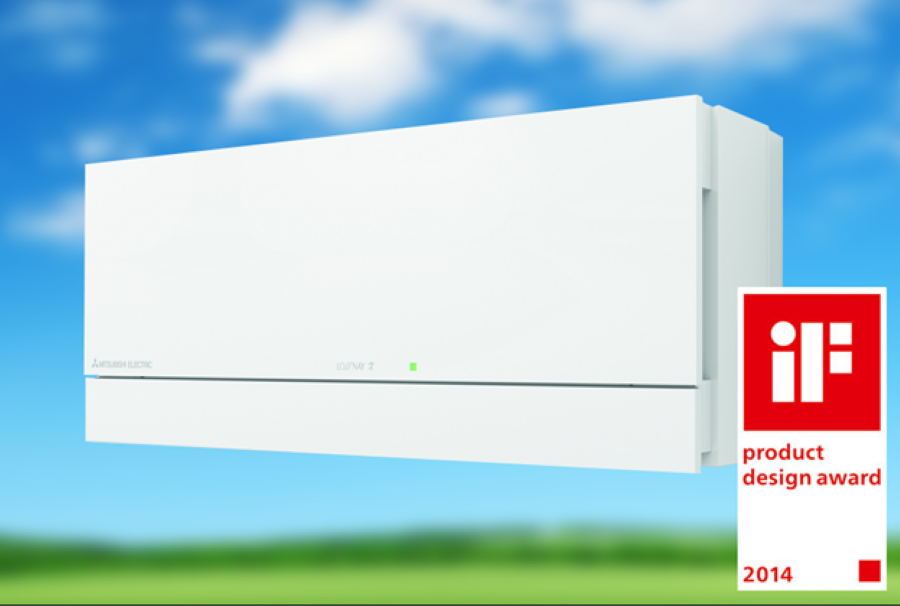
It is cheaper than the alternative models, it takes up less space, is easy to install, and is highly effective. With this ventilation system, you’ll be able to enjoy breathing fresh, allergen-free air without its noise disrupting your day, as the fans are very quiet. It will also take great care of your log cabin and all its crevices.
How it works: the recuperator VL-100U5-E features the Lossnay plate heat exchanger, in which stale and fresh air pass through. The air from inside the room warms up the incoming air from outside during this process.
The technical benefits of the recuperator VL-100U5-E include:
• Sleek, modern design
• Energy efficiency – 15 W on low power and 31 W on high power
• 2 ways to blow out air – horizontal and vertical
• The temperature exchange efficiency of 73/80%
• Quiet fan – 25/37 dB
• The lengthening pipes that are included in the set are 50 cm long
• 3 m power cord
The device has been awarded the “IF design award 2014” for its low noise levels, aesthetic design and functionality.
So, if you were looking for effective log cabin ventilation that wouldn’t break the bank, here it is! Increase the longevity of your chosen model and feel energetic and refreshed every day by installing the recuperator somewhere close to the entrance and the ceiling. As long as the spot of your choice is reasonable, it will work effectively and guarantee all the benefits stated on the label.
If you have any questions about choosing the right prefabricated log cabin or the technological solutions, plus any queries concerning the maintenance and warranty, please contact our friendly sales team by calling 02070994301 or writing to [email protected] to get all the information you need.